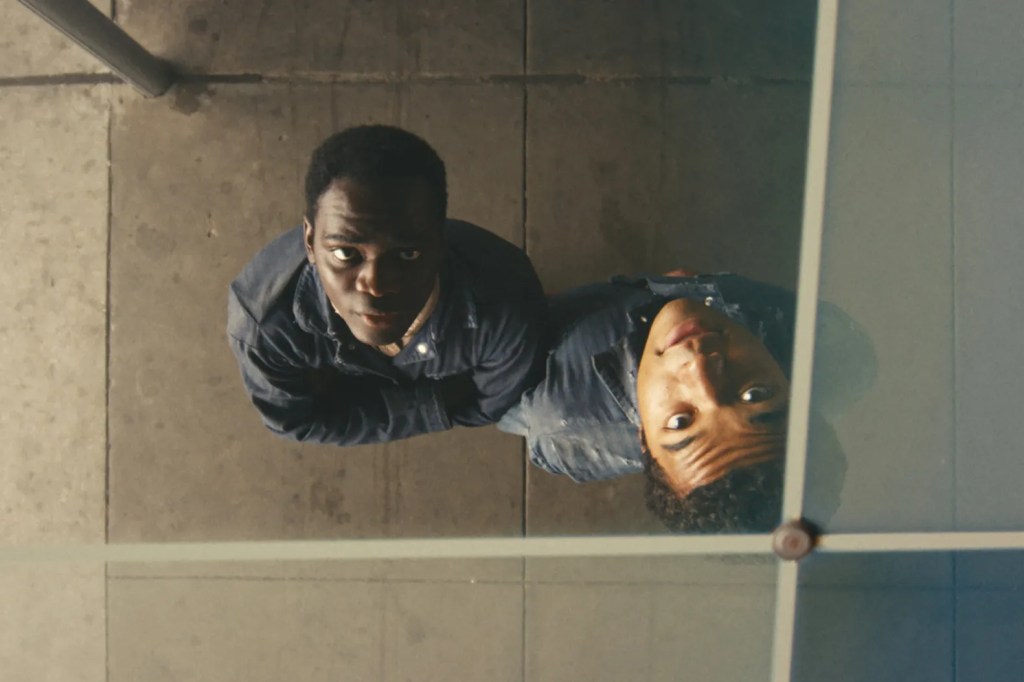
Welcome back to the next installment of The Oscar Code’s Case Study series. I hope you all enjoyed my Dune: Part Two article from Tuesday and learned a lot about that film’s Oscar campaign path. As mentioned before, this is a series that will go over the previous year’s Best Picture nominees and why it ultimately won or lost the award that year using historical data. The order of the series will be in reverse chronological order of the odds of winning for last year’s Best Picture nominees from Ben Zausmer’s Oscar Betting Odds 2025 article. The next film that will be discussed is Nickel Boys.
The Story During Awards Season: Nickel Boys, an adaptation of Colson Whitehead’s Pulitzer Prize winning historical fiction novel about the friendship between two African American teenagers in an abusive reform school, was nominated for Best Picture after high critical acclaim after its premiere at the Telluride Film Festival. The film particularly was acclaimed for its use of first person point of view cinematography between characters. Outside of Best Picture, the film’s sole other nomination was for Best Adapted Screenplay. It won neither award at the ceremony. Despite its critical acclaim, it was expected to be nominated for more as well as be a frontrunner for Best Cinematography, which it was ultimately not nominated for.
What Helped Its Nomination: Nickel Boys was incredibly well received by critics and by several voting groups last awards season. The film was nominated for Best Picture-Drama at the Golden Globes, Best Feature at the Independent Spirit Awards and the Gotham Awards, and Best Picture at the Critics’ Choice Awards. It was also listed in the American Film Institute’s top 10 films of 2024. Outside of those Best Picture nominations, it also won Best Director at the Gotham Awards and the New York Film Critics Circle Awards as well as winning Best Cinematography at the Independent Spirit Awards, Los Angeles Film Critics Association Awards, and the New York Film Critics Circle Awards. The love from various voting groups and critics was the ultimate factor in it being nominated for Best Picture.
Why It Ended Up Losing Best Picture: Despite the love from several voting groups and critics, the biggest obstacle for Nickel Boys was it lack of Guild nominations. Like I mentioned in my I’m Still Here article, there has not been a Best Picture winner in the past 20 years that did not have a Guild nomination. Additionally, Moonlight was the only Best Picture winner in the past 20 years (or 5% of all Best Picture winners) that did not win Best Picture at any of the major Guilds, so the odds were already stacked against it for its lack of nominations on that front. While it was well received by critics groups and independent voting groups, the film did very poorly with major award nominations. Its nomination for Best Picture-Drama at the Golden Globes was its sole nomination and the film’s primary selling point and strength, which was its cinematography, was not even nominated in that category not only at the Oscars but also in the American Society of Cinematographers Guild awards. The film’s studio, Amazon MGM Studios, has also not had great luck winning Best Picture. Before acquiring MGM, Amazon had never won Best Picture and the last MGM film to win Best Picture was Ben-Hur in 1959. Regardless of its lack of winning Best Picture in this century, this was a very poorly planned awards campaign for the film and I do not see it getting better for Amazon MGM Studios.
The Ultimate Takeaway: Nickel Boys was beloved by critics, filmmakers, and voting groups. However, thanks to a very poorly planned awards campaign by its studio, it resulted in a lack of Guild nominations and was not nominated in the film’s strongest category which really hurt its chances of winning Best Picture and disappointed awards wise. I think if Amazon MGM invested more money into this film’s campaign, it might’ve had a legit chance. Normally, I would say I hope they learned their lesson this awards cycle but I am not confident in either of their contenders currently. After The Hunt was not well received by critics at the Venice Film Festival and while Hedda was better received by critics, it has not been as widely talked about for frontrunner status. Unless they really change how they campaign their films, it’s going to be a long, long time before Amazon MGM wins one.
Hope you all enjoyed the latest installment of the Case Study series! The next installment will be out on Saturday and will cover The Substance. Feel free to provide feedback and ask any questions about this series! I look forward to hearing from all of you.
 The Oscar Code
Leave a comment